What Should You Eat Before and After Panchakarma?
Panchakarma is one of Ayurveda’s most respected detoxification and rejuvenation therapies, designed to cleanse the body, restore balance, and support overall well-being. While the therapies themselves play an important role, your diet before and after Panchakarma is equally essential for achieving the best results. Eating the right foods helps prepare your digestive system, supports detoxification, and allows your body to recover effectively after treatment. A proper diet also helps maintain the benefits of Panchakarma. It supports healing and keeps your body balanced after treatment.
Whether you are planning your first Panchakarma session or have already begun your wellness journey, understanding what to eat can help maximize the benefits of this ancient Ayurvedic practice. At Panchakarma Dubai, experienced Ayurvedic practitioners provide personalized guidance on both treatments and dietary recommendations to ensure every patient enjoys a safe and effective healing experience.
Why Is Diet Important During Panchakarma?
According to Ayurveda, digestion, known as Agni, is the foundation of good health. If your digestive fire is weak, toxins (Ama) can accumulate in the body, leading to various health concerns. Panchakarma aims to remove these toxins, but the body must be properly prepared before treatment and carefully nourished afterward.
A balanced Ayurvedic diet during this period helps:
- Prepare the digestive system for detoxification
- Support the body’s natural cleansing process
- Improve nutrient absorption
- Reduce digestive discomfort
- Promote faster recovery and rejuvenation
- Enhance the long-term benefits of Panchakarma
What Should You Eat Before Panchakarma?
The preparation phase usually begins a few days before your scheduled treatment. The goal is to make digestion easier and reduce the body’s toxin load.
Choose Light and Easily Digestible Foods
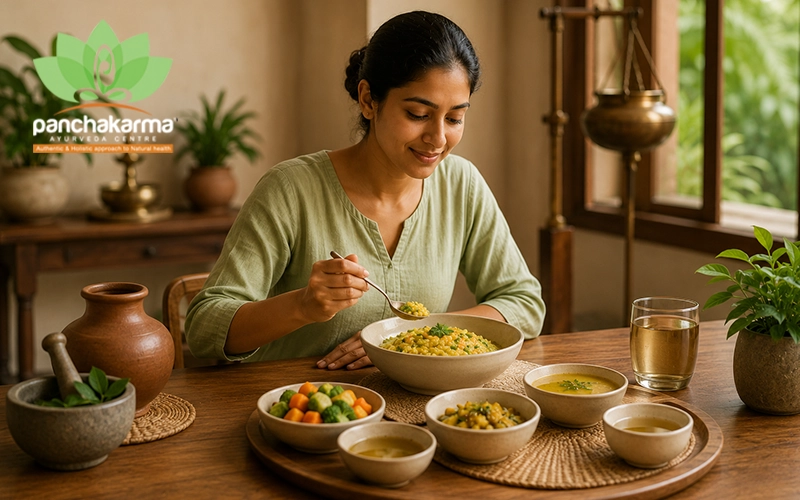
Focus on freshly cooked meals that are simple and nourishing. Good options include:
- Rice
- Moong dal
- Vegetable soups
- Steamed vegetables
- Soft cooked grains
- Warm herbal teas
These foods are gentle on the digestive system and help your body prepare for detoxification.
Stay Well Hydrated
Drink warm water throughout the day to support digestion and maintain hydration. Herbal teas recommended by your Ayurvedic practitioner may also help stimulate digestion naturally.
Eat Fresh Foods
Freshly prepared meals are preferred in Ayurveda because they retain more nutrients and are easier to digest than processed or packaged foods.
Eat Mindfully
Avoid overeating before Panchakarma. Eat slowly, chew thoroughly, and stop when you feel comfortably satisfied rather than completely full.
Foods to Avoid Before Panchakarma
Certain foods may slow digestion or increase toxin accumulation. Consider limiting or avoiding:
- Fried foods
- Fast food
- Processed snacks
- Sugary desserts
- Soft drinks
- Excess caffeine
- Alcohol
- Red meat
- Highly spicy meals
- Frozen or leftover foods
Reducing these foods allows your digestive system to function more efficiently during treatment.
What Should You Eat After Panchakarma?
After Panchakarma, your digestive fire becomes sensitive. Gradually reintroducing foods helps your body adjust while preserving the benefits of detoxification.
Start with Warm, Soft Foods
Traditional Ayurvedic recommendations often include Khichari, a simple combination of rice and split moong dal. It is easy to digest and provides balanced nourishment.
Other suitable options include:
- Vegetable broth
- Rice porridge
- Lentil soup
- Steamed vegetables
- Light herbal teas
Add Foods Gradually
As digestion improves, you can slowly introduce:
- Fresh fruits
- Whole grains
- Cooked vegetables
- Healthy fats like ghee
- Mild spices such as cumin, coriander, and turmeric
Introduce one new food at a time to observe how your body responds.
Continue Drinking Warm Water
Warm water supports digestion and helps maintain hydration after detoxification.
Foods to Avoid After Panchakarma
To protect your recovering digestive system, avoid:
- Heavy fried foods
- Packaged snacks
- Refined sugar
- Carbonated beverages
- Alcohol
- Excess coffee
- Cold drinks
- Processed meats
- Very spicy foods
Returning to unhealthy eating habits too quickly may reduce the effectiveness of your Panchakarma treatment.
Lifestyle Tips After Panchakarma
Diet works best when combined with healthy lifestyle habits. Ayurveda recommends:
- Getting adequate sleep
- Eating meals at regular times
- Practicing gentle yoga or walking
- Managing stress through meditation
- Avoiding excessive physical exertion
- Following your practitioner’s personalized recommendations
These simple habits help maintain balance and extend the positive effects of Panchakarma.
Frequently Asked Questions
Most Ayurvedic practitioners recommend limiting or avoiding coffee during the detox process because it may interfere with the body's natural cleansing and digestive balance.
Fasting is not suitable for everyone. Your Ayurvedic practitioner will recommend the most appropriate preparation based on your health, body constitution, and treatment plan.
The duration varies depending on the therapies performed and your individual health needs. Many people continue eating light, wholesome meals for several days after completing treatment.
Immediately after treatment, cooked foods are generally preferred because they are easier to digest. Raw foods may be introduced gradually based on your practitioner's advice.
No. Ayurveda recognizes that every individual has a unique body constitution (Dosha). Your diet may be customized according to your health condition, digestive strength, and treatment goals.
Conclusion
The foods you choose before and after Panchakarma play a significant role in the success of your detoxification journey. A light, nourishing, and easily digestible diet helps prepare your body for cleansing while supporting recovery and long-term wellness afterward. Following personalized dietary guidance can maximize the benefits of Panchakarma and promote better digestion, improved energy, and overall balance.
If you are considering authentic Ayurvedic detox therapy in the UAE, Panchakarma Dubai offers comprehensive Panchakarma treatments guided by experienced Ayurvedic professionals. From personalized consultations and traditional therapies to customized dietary recommendations, Panchakarma Dubai is committed to helping you achieve lasting wellness through authentic Ayurveda. Whether you are seeking preventive care, stress management, or holistic rejuvenation, Panchakarma Dubai provides a trusted environment where your health and well-being remain the highest priority.